
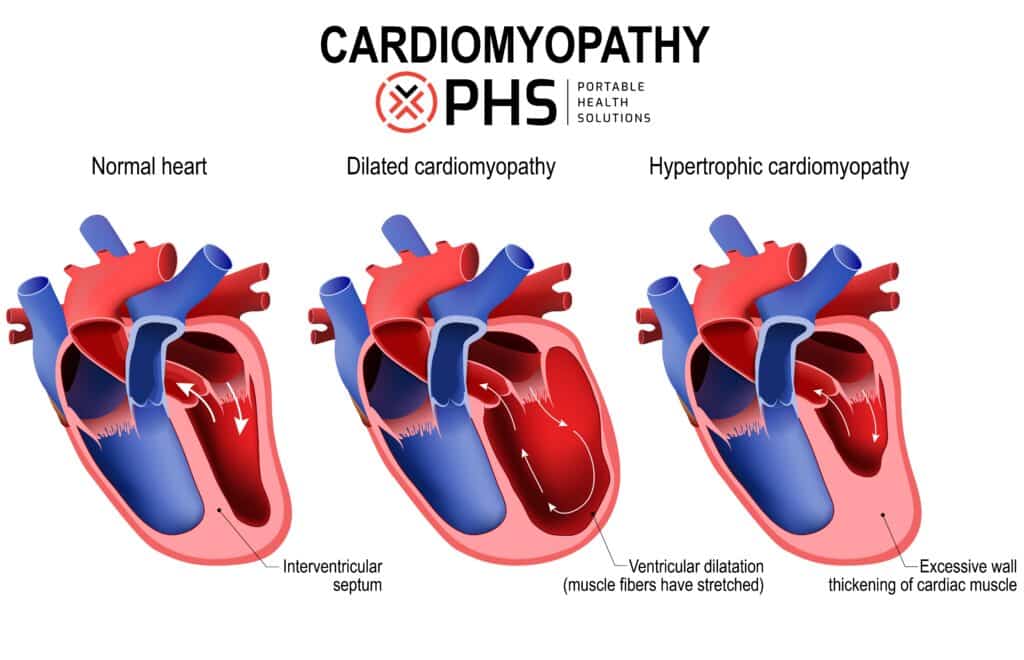
As we continue to highlight the importance and raise awareness of heart health as part of American Heart Month, today we’ll briefly touch on cardiomyopathy and share some resources to learn more. As always, this is for general education purposes only.
What is Cardiomyopathy? As the American Heart Association explains, cardiomyopathy is a heart muscle disease that affects the heart’s ability to pump blood to the body. “In most cases, cardiomyopathy causes the heart muscle to become enlarged, thick or rigid.”
As cardiomyopathy gets worse, the heart weakens, becoming less able to pump blood to the body and maintain electrical rhythm with regularity, which can lead to more serious conditions.
What happens? This can lead to arrhthmias (irregular heartbeats), heart failure, heart valve problems, however, this is not an exhaustive list.
What types are there? We cannot do justice in explaining and summarizing in brief the complexities and variations of cardiomyopathy, however, we can best serve the effort to raise awareness by first listing the types with direct links to AHA’s informational pages, and then sharing additional resources at the end of this article:
- Dilated cardiomyopathy
- Hypertrophic cardiomyopathy (HCM)
- Restrictive cardiomyopathy
- Arrhythmogenic right ventricular dysplasia
- Transthyretin amyloid cardiomyopathy (ATTR-CM)
Causes? There is a wide range of potential causes, from genetics to other diseases or contributing factors; however, in some cases, the underlying reason may still remain unknown.
Symptoms? There is a kaleidoscope of symptoms and we provide resources in this article to learn more, however, we list a few here. First, there can be severe fatigue, dizziness, fainting, coughing while lying down, and bloating of the stomach area due to fluid buildup. Furthmore, symptoms may include shortness of breath even at rest, pronounced chest pain especially after heavy meals or physical activity, and swelling of the legs, ankles, feet, stomach area, and neck veins.
Diagnosis? There are many options:
- Chest X-ray
- Echocardiogram (ECHO)
- Electrocardiogram (ECG)
- Blood tests can include iron level checks; assessments of kidney, thyroid, and liver function; and moreover, measurement of B-type natriuretic peptide (BNP) because this heart-related protein often rises during heart failure.
- Exercise stress tests
- Cardiac MRI
- Cardiac CT scan
- Genetic testing/screening
- Cardiac catheterization
Treatment? Treatments for cardiomyopathy focus on managing symptoms, preventing progression, and reducing complications, which is key. First, there are several treatment options that can include beta-blockers, blood pressure medications, and diuretics. Treatments may involve pacemakers or implantable cardioverter defibrillators. In more advanced cases options can include heart transplantation, septal ablation, or myectomy.
Would you like to learn more? Here are some excellent resources to continue your journey:
Mayo Clinic – Cardiomyopathy Diagnosis & Tests
National Institutes of Health – Cardiomyopathy Diagnosis
