
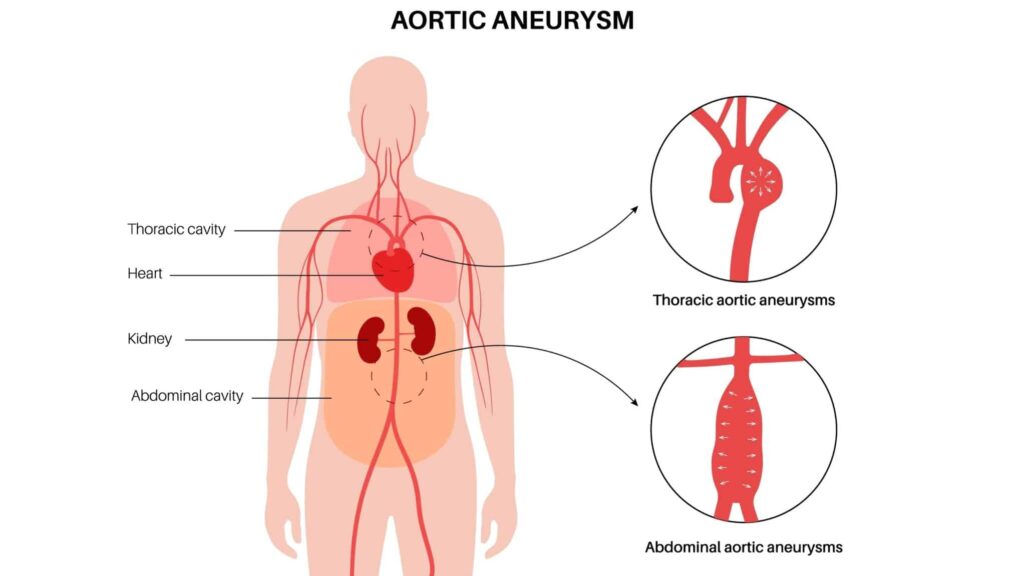
What is an aortic aneurysm? An aortic aneurysm is a bulge in the aorta, the body’s main artery that carries blood from the heart. This can happen anywhere along the wall of the aorta where there is a weak area, including along the belly area (Abdominal aortic aneurysm) and the chest area (Thoracic aortic aneurysm). They can either burst or split (also known as dissect).
Risk factors include high blood pressure, high blood cholesterol, atherosclerosis, and most importantly, a history of smoking. In fact, 75% of all abdominal aortic aneurysms can be traced to smoking, according to the CDC.
Screening – The US Preventive Services Task Force recommends that even if they show no symptoms, men between the ages of 65 and 75 who have ever smoked should get an abdominal ultrasound screening for abdominal aortic aneurysm.
Echocardiograms can be used to screen or diagnose for thoracic aortic aneurysm, along with CT scans and MRIs. A lack of symptoms is often the case with thoracic aortic aneurysms; in fact, they are more often than not found through an imaging test that was conducted for an unrelated reason.
Would you like to learn more? Here are some excellent resources:
Mayo Clinic – Aortic aneurysm: Symptoms and causes
Mayo Clinic – Abdominal aortic aneurysm: Diagnosis and treatment
National Institutes of Health – Aortic Aneurysm
Mayo Clinic – Thoracic Aortic Aneurysm: Diagnosis and Treatment
